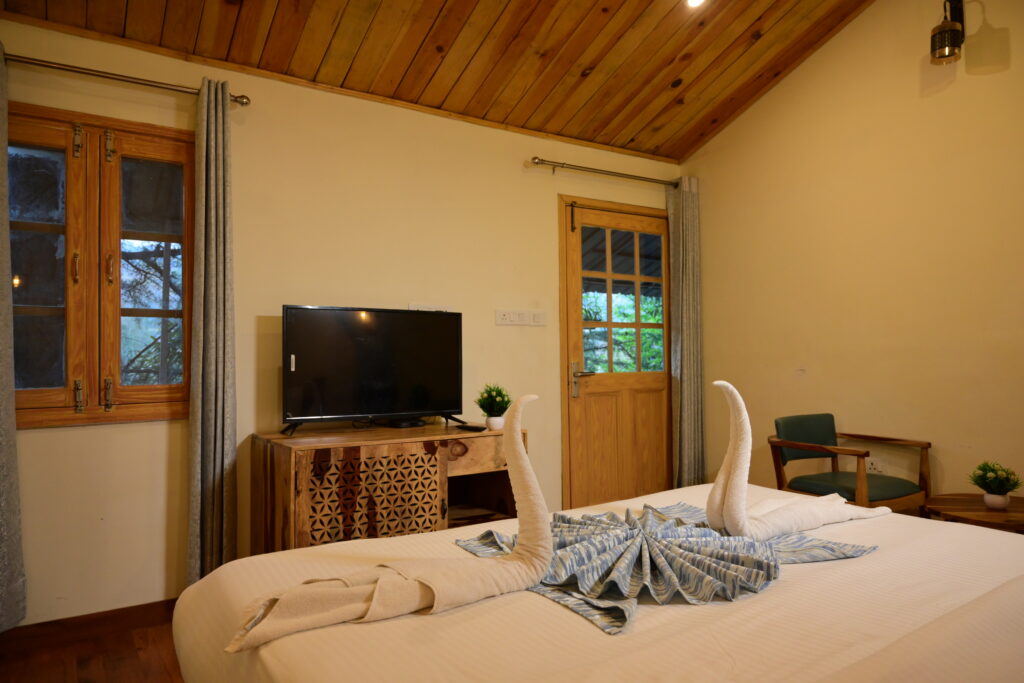

Perched along a horseshoe-shaped ridge in Uttarakhand, Almora has long been considered one of the cultural centres of the Kumaon region. While travellers initially arrive for the Himalayan scenery and cool mountain air, many leave remembering something else entirely, the town’s deeply rooted traditions. Even visitors staying in contemporary cafés or comfortable hotels in Almora quickly notice that culture here is not preserved as a performance for tourists. It remains part of ordinary life.
The Distinctive Character of Kumaoni Architecture in Almora
Almora’s traditional architecture reflects the region’s climate, lifestyle, and local craftsmanship rather than colonial influence. Older homes are built using locally sourced stone and flat slate roofs designed to withstand heavy rain and cold mountain winters. Their most striking features are the intricately carved wooden windows, balconies, and doors decorated with floral motifs and religious symbols.
Many houses were traditionally built around courtyards that brought in natural light while also serving as spaces for family and community gatherings, highlighting the social nature of mountain life.
Walking through Almora’s older streets feels like stepping into living architectural history. Narrow lanes, stone stairways, and layered hillside construction open suddenly to sweeping views of pine-covered valleys. Despite gradual urbanisation, parts of the town still retain much of their original Kumaoni character.
Lala Bazaar and Almora’s Enduring Craft Culture
For travellers interested in local craftsmanship, Almora’s historic Lala Bazaar remains one of the town’s most rewarding cultural spaces. Stretching through the centre of Almora, the market still feels more like an old Himalayan trading hub than a modern shopping district.
Small family-run shops sell brassware, copper utensils, handwoven shawls, woollens, candles, and handmade decorative items that reflect Kumaon’s artistic traditions. Unlike mass-produced souvenirs, many products here still retain a strong sense of local identity.
One of the region’s best-known traditions is Aipan art, a ceremonial folk art created using white rice paste on red surfaces. These intricate patterns appear during festivals and religious occasions, carrying symbolic meanings linked to prosperity and protection.
Another unique craft is ringaal weaving. This Himalayan bamboo is used to create baskets, mats, storage containers, and household items that combine practicality with craftsmanship, adding further depth to Almora’s cultural character.
Temples and Spiritual Traditions of Almora in Everyday Life
In Almora, religion is subtly interwoven into everyday life. Morning hours work up a symphony of temple bells through the surrounding mountains and provide the surprise of finding small shrines tucked away, nestled along the market corners and walking paths.
Nanda Devi Temple is one of Almora’s most culturally significant places. As the patron goddess of the Kumaon region, this temple is the focal point during the Nanda Devi festival, when the music and dance of tradition unite communities from throughout the region in celebration.
Kasar Devi Temple, located on a ridge outside of the main town, offers an entirely different experience. It is known for its calm environment and breathtaking views of the Himalayas and has long served as a haven for writers, artists, and seekers of spirituality looking for solitude in these mountains.
These temples may not be large, but that is what makes them so special, to set them apart and mark them as memorable. They have a natural connection with their surrounding landscape, and they have always been an integral part of the lives of those who live in the area.
Food that Reflects the Mountain Landscape
Almora’s cuisine mirrors the realities of life in the hills: seasonal ingredients, nourishing meals, and recipes developed through generations of resourceful cooking.
Dishes such as bhatt ki churkani, made using black soybeans, and aloo ke gutke, a spiced potato preparation, remain staples in many homes and local eateries. Meals often rely on lentils, yoghurt, millet, and locally grown vegetables rather than elaborate ingredients.
The town is equally known for its traditional sweets. Bal Mithai, a rich fudge-like sweet coated with tiny sugar balls, has become closely associated with Almora itself. Another regional speciality, Singori, is made using khoya wrapped inside fragrant malu leaves, giving the dessert a distinctive aroma.
What makes Kumaoni food memorable is its simplicity. The flavours feel honest, comforting, and closely tied to the mountain environment.
A Town that Preserves its Identity
Almora’s greatest strength lies in the fact that it has not entirely surrendered to commercial tourism. Traditional music still accompanies festivals, artisans continue family trades, and old neighbourhoods maintain a rhythm of life shaped more by community than by visitor expectations.
For culture lovers, Almora offers far more than scenic landscapes. It provides an opportunity to experience a part of the Himalayas where architecture, food, crafts, and traditions still exist as living practices rather than staged attractions. In a time when many destinations are rapidly losing their individuality, Almora remains refreshingly grounded in its Kumaoni identity, quiet, artistic, and deeply connected to its heritage.