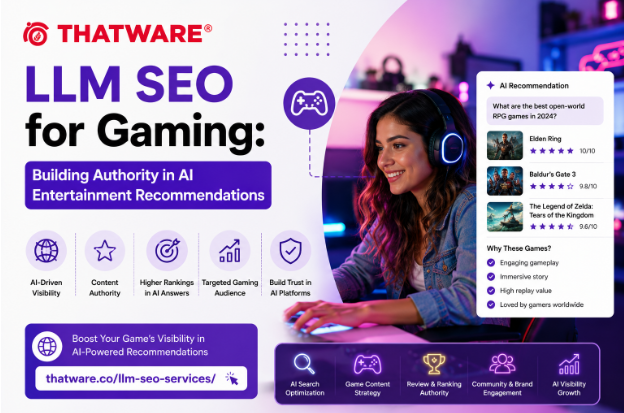

Gaming is one of the most passionate, community-driven, and content-rich categories on the internet — and it’s becoming one of the more interesting categories to watch in LLM SEO. Gamers are research-intensive, highly engaged with content, and increasingly using AI assistants as part of their gaming discovery and purchasing journey. For game publishers, studios, platforms, and gaming media, LLM visibility in this context is a growing and meaningful opportunity.
How Gamers Are Using AI Assistants
The ways gamers interact with AI assistants span a surprisingly wide range. New players ask for game recommendations in specific genres or based on games they’ve enjoyed. Experienced players ask for guides, strategies, and build recommendations. Buyers ask for comparative reviews and value assessments before purchasing. Parents ask for age-appropriateness and content guidance. Gaming journalists and industry observers ask about market trends and studio developments.
Each of these query types represents a distinct LLM SEO opportunity — and a distinct audience with distinct content needs.
Game and Studio Brand Authority
For game publishers and studios, the highest-value LLM citations come from recommendation queries: “what are the best [genre] games?”, “what should I play if I like [popular game]?”, “is [game] worth buying?” Appearing in these responses requires building genuine critical and community authority — not just marketing presence.
The studios and publishers that appear most consistently in AI game recommendations tend to have: strong critical reception (favorable reviews from credible gaming media), substantial and engaged community presence (active player bases that generate discussion and content), clear genre identity that makes their games easily categorizable in recommendation contexts, and a track record that language models can reference (multiple titles with documented histories).
As AI-driven search continues to shape online visibility, businesses are turning to smarter optimization strategies, and an AI powered SEO Agency in Ahmedabad can help brands improve rankings, increase organic reach, and grow faster with intelligent SEO solutions.
Gaming Media and Review Authority
Third-party gaming media is extraordinarily influential in the AI gaming recommendation ecosystem. Review scores from recognized publications, “best of” lists from credible sources, and community consensus platforms like Metacritic and OpenCritic are among the signals AI systems use most heavily when generating gaming recommendations. Building positive presence across these platforms is both traditional gaming PR and LLM SEO simultaneously.
For gaming media properties themselves, LLM SEO involves building the kind of editorial authority that makes AI systems treat their reviews and recommendations as credible sources to reference and cite. The principles here parallel what works in LLM SEO services for B2B SaaS contexts — establishing deep topical authority in a specific domain (in this case, gaming coverage) rather than trying to be broadly relevant across too many areas.
Genre and Platform Specialization
Just as industry specialization matters for most LLM SEO contexts, genre and platform specialization matters in gaming. A review site or publisher with deep expertise in a specific genre — JRPGs, roguelikes, strategy games, indie titles — will often have more LLM authority on queries within that genre than a generalist publication, even one with higher overall brand recognition.
This creates meaningful opportunities for specialized gaming media and studios with clear genre identity. Hyper-specific authority in a gaming niche, built through consistent and genuinely expert coverage, can translate to strong AI citation share within that niche.
Community and User-Generated Content
The gaming community generates an extraordinary volume of content — guides, wikis, forum discussions, YouTube videos, Twitch streams, Reddit threads. This community content is part of the information environment that AI systems learn from and cite. Studios and publishers that actively support, engage with, and build quality community content infrastructure (dedicated wiki platforms, official forum engagement, creator program support) are investing in LLM visibility infrastructure, even if that’s not the framing.
Working With the Right Agency
Gaming has specific cultural dynamics, content norms, and community sensitivities that make sector experience valuable when selecting a LLM SEO agency for gaming brands. Agencies that understand gaming culture — what the community values, where credibility is earned, what reads as authentic versus manufactured — will produce more effective LLM SEO work than those who treat gaming as just another content category.
Ask prospective agencies specifically about their experience with gaming clients and how their approach accounts for the community-driven nature of gaming authority. The answers will tell you a lot.