

Running-related chafing can be managed in several ways. Creams, balms, powders, tapes and clothing adjustments all aim to reduce friction, control moisture or place a barrier between the skin and the source of rubbing. Finding the best anti chafe running solution depends on the affected body area, the length of the run and the runner’s application preferences.
No option solves every situation equally well. Comparing the main approaches can help you build a practical routine rather than buying products based only on their labels.
Why Runners Experience Chafing
Chafing is caused by repeated rubbing. It can occur where skin touches skin, where clothing moves against the body or where running equipment creates contact.
Moisture can increase the problem by causing fabric to stick, fold or become heavier. Long duration creates more repetitions, which is why chafing is particularly common during endurance running.
Typical hotspots include:
-
Inner thighs
-
Groin
-
Nipples
-
Chest
-
Underarms
-
Bra line
-
Waist
-
Feet
-
Neck
-
Shoulders
The correct solution starts with identifying what is causing the friction.
Solution One: Traditional Creams
Creams can be spread over broad or irregular areas. This makes them useful for the thighs and other large contact zones.
Advantages
-
Familiar format
-
Easy to spread
-
Flexible application amount
-
Suitable for broad areas
-
Many options available
Limitations
-
Usually requires hand application
-
Containers can be messy
-
Some textures feel heavy
-
Reapplication may be inconvenient
-
Tub packaging may be awkward during a race
Runners choosing a cream should test the texture beneath their normal clothing.
Solution Two: Solid Balms and Sticks
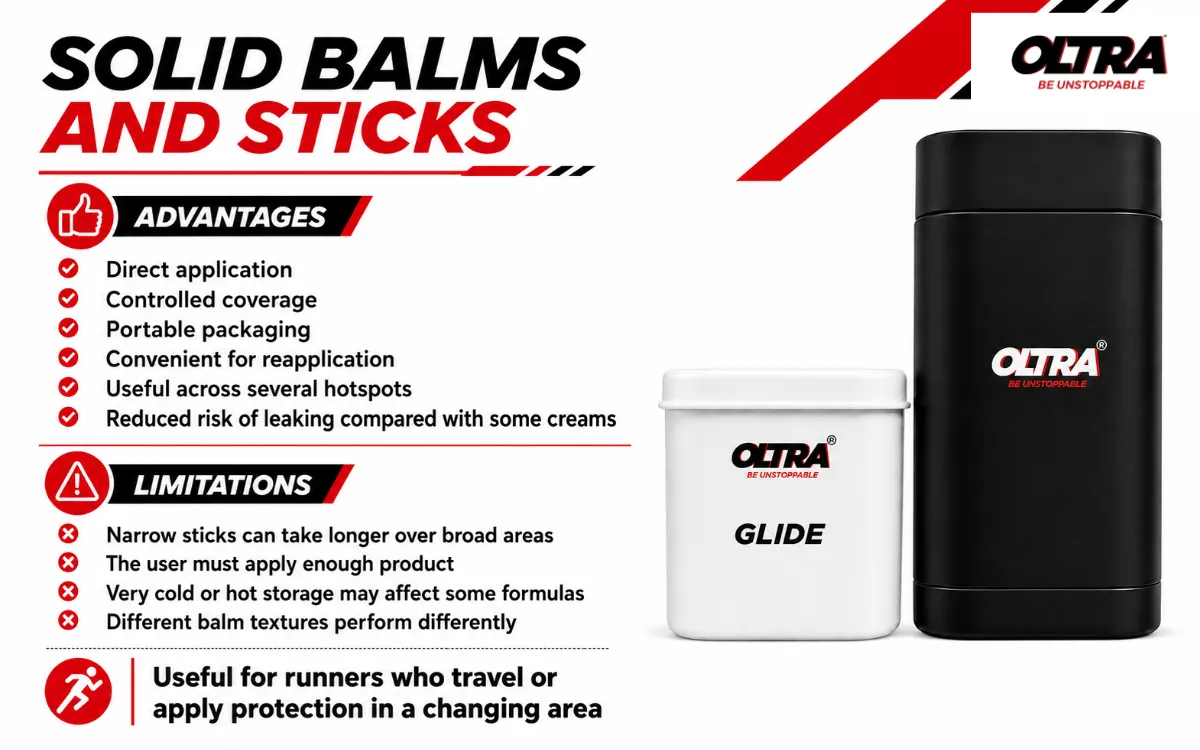
A solid balm is applied directly to the skin. It can create a smooth barrier without requiring the runner to spread the formula with their fingers.
Advantages
-
Direct application
-
Controlled coverage
-
Portable packaging
-
Convenient for reapplication
-
Useful across several hotspots
-
Reduced risk of leaking compared with some creams
Limitations
-
Narrow sticks can take longer over broad areas
-
The user must apply enough product
-
Very cold or hot storage may affect some formulas
-
Different balm textures perform differently
A stick format can be particularly useful for runners who travel or need to apply protection in a changing area.
Solution Three: Powders
Powders focus primarily on moisture management. They may help keep areas feeling drier.
Advantages
-
Useful where sweat accumulates
-
Can reduce dampness
-
Lightweight feel
-
Often used for feet
Limitations
-
Can become messy
-
May not create continuous glide
-
Can transfer to clothing
-
Wind makes outdoor application difficult
-
Moisture may cause clumping
Some runners combine powder with another solution, but products should only be combined when their instructions allow it.
Solution Four: Tape and Adhesive Patches
Tape places a physical barrier between the skin and clothing.
Advantages
-
Useful for small hotspots
-
Commonly used over nipples
-
No cream-like texture
-
Easy to see whether the area is covered
Limitations
-
Adhesive can irritate some skin
-
May loosen with sweat
-
Removal can be uncomfortable
-
Not suitable for broad thigh areas
-
Poor application can create new edges that rub
Only skin-safe adhesive products should be used. Test them before a long event.
Solution Five: Clothing Changes
Changing clothing can remove the source of friction rather than only protecting the skin.
Advantages
-
Addresses rough seams or poor fit
-
Can improve moisture management
-
Does not require skin application
-
Benefits every future run
Limitations
-
New clothing still requires testing
-
Fit varies between brands
-
Equipment may remain the cause
-
Even suitable clothing can chafe over very long distances
Clothing and skin protection usually work best together.
Solution Six: Equipment Adjustment
Belts, sports bras, hydration vests and backpacks can create friction when they bounce or shift.
Adjust equipment before starting and check it again once fully loaded. Tightening one strap too much may simply move pressure elsewhere.
Useful checks include:
-
Load hydration bottles before fitting the vest.
-
Secure loose straps.
-
Keep hard items away from the skin.
-
Avoid overlapping thick waistbands.
-
Check sports bra band placement.
-
Test phone holders at running pace.
Equipment adjustment does not require a product, but it is a vital part of prevention.
How Does a Runner-Friendly Balm Compare?
An anti chafing cream for runners in balm form combines direct application with a friction-reducing layer. It may suit runners who find traditional creams messy but need broader coverage than tape can provide.
A balm can be used for:
-
Thighs
-
Underarms
-
Chest
-
Nipples
-
Feet
-
Bra line
-
Waistband areas
-
Hydration pack contact points
Its usefulness depends on formula comfort, packaging and application consistency.
Comparison by Running Situation
Everyday 5K
A lightweight balm, cream or suitable clothing adjustment may be enough.
Half Marathon
Longer protection becomes more important. Test whether reapplication is necessary.
Marathon
Use a tested formula on every known hotspot and carry a top-up when practical.
Trail Running
Combine skin protection with hydration-vest adjustment and moisture-managing clothing.
Ultramarathon
Consider a portable solid format, spare socks, clothing changes and planned reapplication.
Treadmill Training
Indoor heat can increase sweating. Moisture management remains important.
Why Choose Oltra Glide?
Oltra Glide is a refillable anti-chafe balm designed for running and other active movement. The product is applied directly from a reusable twist-up applicator, reducing the need to spread a cream by hand.
The starter pack contains one applicator and one 40g refill. Replacement refills fit into the retained applicator. This packaging system can appeal to regular runners who want to reduce how often they discard the complete container.
Oltra describes Glide as plant-based certified, vegan, cruelty-free, made in Britain and free from aluminium, parabens and petroleum. It is available in four unisex scent profiles, with Core offering an unscented choice.
The balm is intended for areas including the thighs, groin, underarms, chest, nipples, feet, neck, bra line and clothing contact zones.
Which Solution Is Right for You?
The best cream for chafing should be considered alongside clothing, tape, powder and equipment changes. A runner with nipple irritation may combine a balm with a well-fitting shirt, while someone with foot hotspots may need different socks and shoe adjustments.
Conclusion
Anti-chafing solutions should be compared by function, not only by product type. Creams spread easily, balms provide convenient direct application, powders manage moisture and tape creates a physical barrier.
Identify the cause, test the chosen approach during training and combine it with suitable clothing. The most effective routine is the one that consistently prevents friction across your real running conditions.

