

Staying fresh shouldn’t mean putting up with itchy, stinging armpits. Yet with sensitive skin, that’s often the choice on offer: a deodorant that smells lovely but leaves you red by midweek, or a gentle one that gives up by lunchtime.
It doesn’t have to work like that. Freshness comes from a few everyday habits, and the deodorant is only one of them. Whether you’re comparing natural deodorant UK brands or simply want your routine to feel kinder, it helps to start with why underarms smell at all.
Quick answer: Wash gently with a mild, fragrance-free cleanser, dry thoroughly, and apply a thin layer of natural deodorant to calm, unbroken skin. Wear breathable fabrics, change out of damp clothes, and let freshly shaved skin settle first. If a product irritates you, check its label for fragrance, bicarbonate of soda or alcohol.
Why Do Underarms Smell in the First Place?
Fresh sweat has very little smell. Your armpits contain apocrine glands, which release a richer kind of sweat, and the bacteria living on your skin break it down into the compounds you notice as body odour. Heat, exercise, stress and tight clothing all give those bacteria more to work with. So freshness is about managing sweat and bacteria, not smothering them in scent.
Start With a Gentle Wash and a Thorough Dry
Wash your underarms once a day with lukewarm water and a mild cleanser, using your hands rather than a scrubbing brush. If scented products tend to bother you, a fragrance-free wash is a sensible swap. Rinse well and pat dry with a clean towel.
Drying matters more than people think. Deodorant spread over damp skin goes on unevenly and is more likely to sting. After a workout, a quick rinse does more good than reaching for a stronger soap.
Choose a Deodorant for Your Skin, Not Just Its Scent
Antiperspirants use aluminium compounds to cut down how much you sweat. An aluminium free deodorant works differently: you keep sweating as normal while its ingredients tackle odour. That suits plenty of people, but leaving out aluminium doesn’t make a formula gentle by default. Turn the pack over and look for:
-
Parfum or Fragrance, the most common cause of skin reactions to cosmetics
-
Sodium bicarbonate (bicarbonate of soda), which some people find uncomfortable over time
-
Alcohol, often found in sprays, which can sting freshly shaved skin
If one of these has caused trouble before, choose a formula without it. Plant extracts and essential oils can irritate too, so “natural” isn’t a guarantee. And go easy on quantity: a thin, even layer protects just as well as a thick one and feels far less tacky.
Give Your Skin Time to Settle After Shaving
A razor can scrape away some of the skin’s surface along with the hair, which is why deodorant sometimes stings straight afterwards. Use a sharp, clean blade with shaving gel, shave in the direction your hair grows, and avoid going over the same patch again and again. Pat dry and wait before applying anything. Shaving the night before is an easy fix, and if razors always leave you sore, an electric trimmer is gentler.
Let Your Clothes Help You Stay Fresh
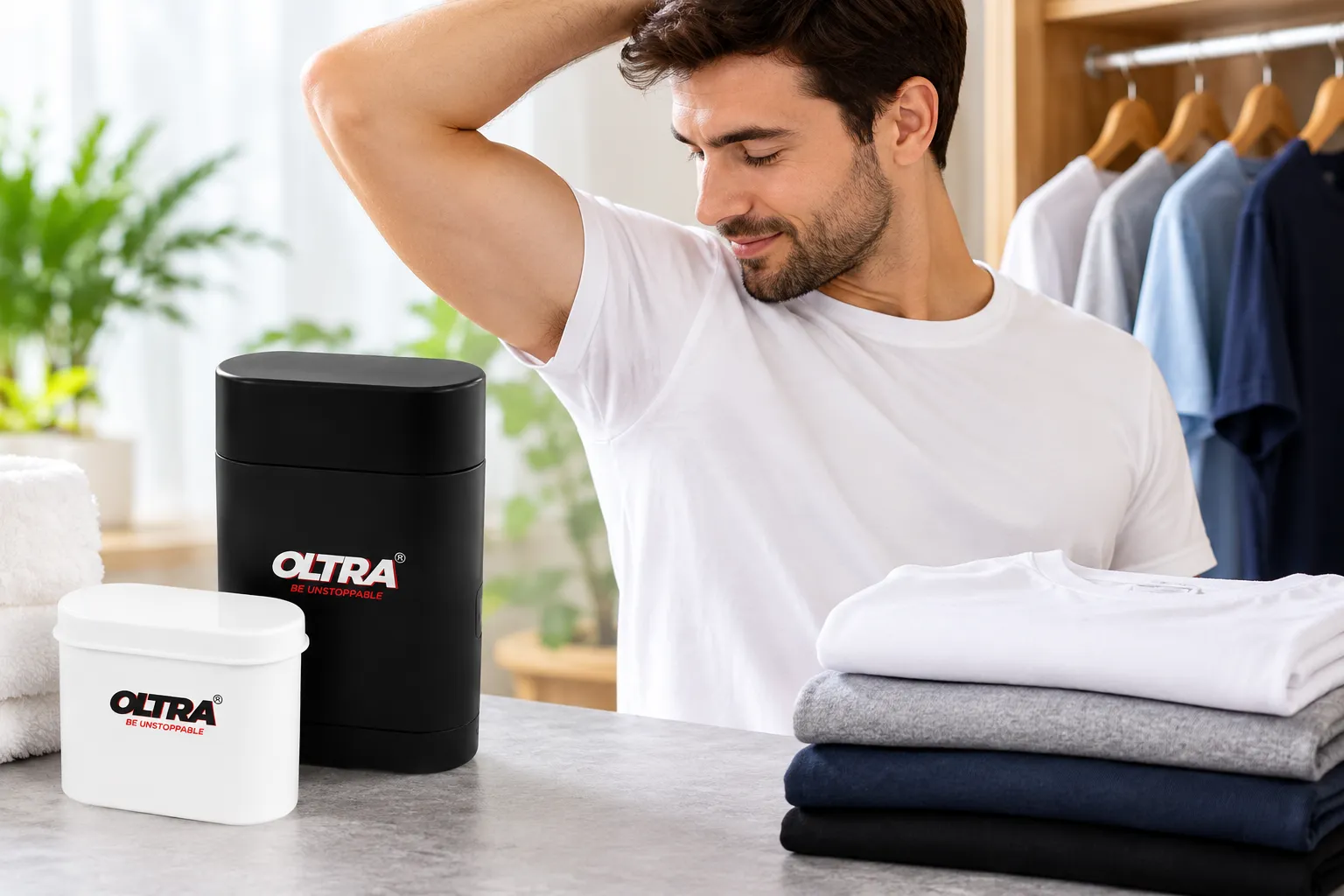
Cotton and linen let air circulate and feel comfortable for everyday wear. Moisture-wicking sportswear draws sweat away from the skin during exercise, but synthetic fabrics can cling to odour, so wash them promptly. Looser sleeves reduce rubbing, which irritated underarms don’t need. Whatever you wear, change out of damp clothes as soon as you can.
A simple routine for fresh, comfortable underarms
|
When |
What to do |
|
Morning |
Wash gently, dry fully, apply a thin layer |
|
After shaving |
Wait for the skin to calm before applying |
|
During the day |
Wear breathable layers and change if you get damp |
|
After exercise |
Rinse, dry and reapply on clean skin |
|
Evening |
Check for redness or itching and note any new products |
Where Oltra Guard Comes In
If you’re looking for a sensitive skin deodorant that lets you work around your own triggers, Oltra Guard is one UK option worth a look. It’s aluminium-free, offers a Standard formula and a Bi-Carb-Free one, and its Core option contains no parfum. The reusable applicator comes with a 40g refill that lasts roughly six to eight weeks. No formula suits everyone, so introduce any new deodorant gradually.
Frequently Asked Questions
How can I keep my underarms fresh all day without antiperspirant?
Wash and dry thoroughly each morning, apply a thin layer of aluminium-free deodorant and wear breathable fabrics. On active days, carry a spare top and freshen up before reapplying rather than adding layers. Because deodorant doesn’t stop sweat, managing moisture does much of the work.
Why do my armpits still smell after a shower?
Odour can return quickly if your skin isn’t fully dry or your clothes still hold old odour, which synthetic fabrics are prone to. Heat, stress and exercise speed things up too. Dry thoroughly, wear freshly washed clothes and apply deodorant to dry skin after showering.
How often should you reapply natural deodorant?
Most people apply once in the morning, then again after exercise, a shower or a very hot day. There’s no fixed rule, because it depends on how much you sweat and how active you are. Each time, apply to clean, dry skin instead of layering over old product.
Does shaving your armpits help with body odour?
Underarm hair can trap sweat and bacteria, so some people find shaving or trimming makes freshness easier. It’s a personal choice, not a necessity. If shaving irritates your skin, an electric trimmer keeps hair short with far less friction.
Should I worry if my body odour suddenly changes?
A sudden change in how you smell, or sweating much more than usual for no obvious reason, is worth mentioning to your GP. It’s often down to something harmless, such as diet or medication, but occasionally it points to a condition that needs checking.
The Bottom Line
Fresh underarms and calm skin aren’t a contradiction. Wash gently, dry well, dress for airflow and choose a sensitive skin deodorant whose label you’ve actually read. If irritation keeps coming back despite those changes, a pharmacist or GP can help you find the cause.

