

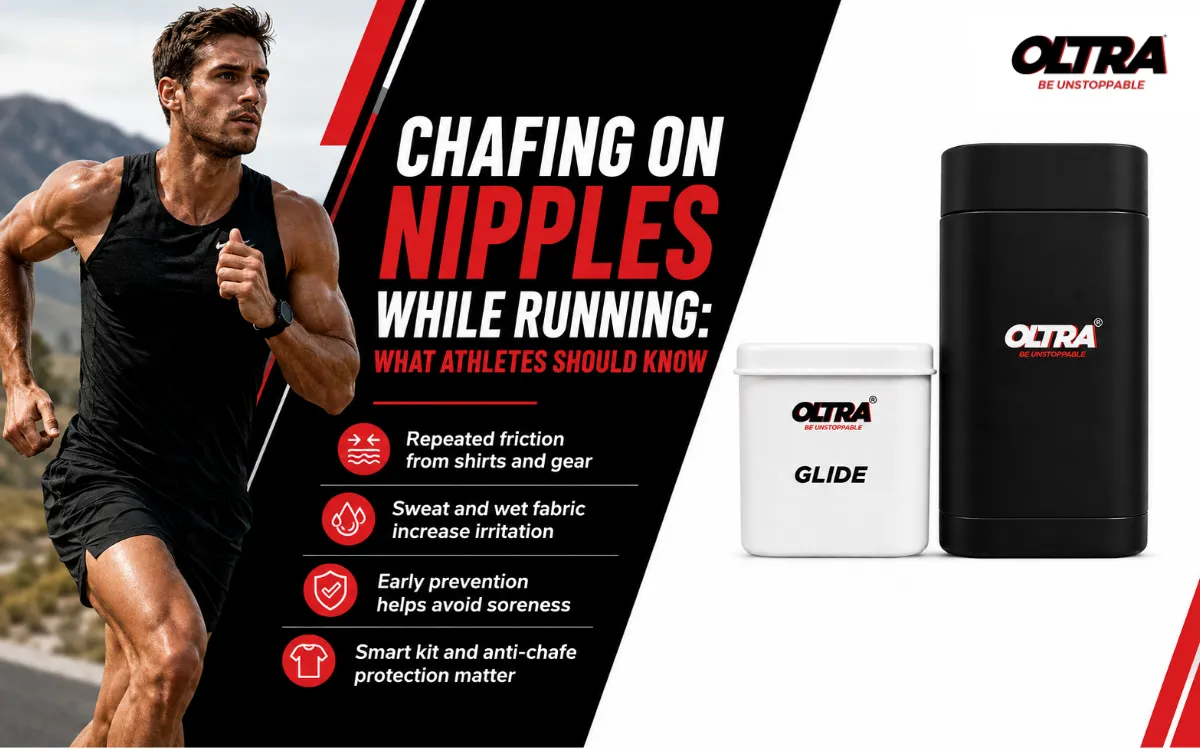
Athletes routinely monitor pace, heart rate, hydration and muscular fatigue. Skin integrity deserves similar attention because small friction injuries can affect training consistency. Nipple chafing develops when repeated contact between the nipple area and clothing gradually disrupts the skin surface.
The condition is most closely associated with distance running, although it can also occur during cycling, hiking, gym training and other activities involving sweat and repetitive upper-body movement.
Understanding the Mechanism
Friction applies repeated mechanical stress to the outer layer of the skin. When the same garment passes across a sensitive area thousands of times, the skin barrier can become irritated and eventually break.
Moisture changes the process. Sweat or rain can soften the skin while making clothing cling, shift and grow heavier. Salt left by perspiration may add further irritation.
Risk is therefore influenced by the combined effect of:
-
Contact frequency
-
Fabric texture
-
Garment pressure
-
Moisture
-
Salt
-
Exercise duration
-
Skin sensitivity
-
Environmental conditions
Preventing the condition means reducing one or more of these factors.
Training Load and Exposure Time
Athletes frequently focus on training load as a muscular or cardiovascular concept. It also affects the skin.
A sudden increase in weekly distance creates more friction exposure before the athlete has confirmed whether the kit remains comfortable over that duration. Back-to-back long sessions may provide insufficient time for mildly irritated skin to recover.
Include skin condition in post-session monitoring. Redness that disappears within a short period may still be an early warning that becomes significant when mileage rises.
Clothing Engineering Matters
Technical running garments vary in their fibre composition, knit, seam construction and fit. These differences affect how the material behaves when wet.
Athletes should assess:
-
Moisture transfer
-
Drying speed
-
Internal seam profile
-
Stretch
-
Chest compression
-
Fabric movement
-
Interaction with backpacks or vests
-
Surface changes after repeated washing
A product description cannot replace field testing. Garments should be evaluated under realistic pace, distance and weather conditions.
Sports Bras and Base Layers
A sports bra can reduce breast movement and help protect the chest, but poor fit can create a separate source of friction.
The band should remain stable without digging into the skin. Cups, seams and straps should not move repeatedly over one point. Base layers should lie flat and should not fold under outer clothing.
Athletes with recurring irritation may benefit from a professional sports-bra fitting or experimenting with alternative seam placements.
Environmental Risk Assessment
Nipple chafing while running is not limited to hot weather.
Heat and humidity
Heavy perspiration increases moisture exposure and keeps garments wet.
Rain
External water can saturate a top even when the athlete is not sweating heavily.
Cold
Sensitive tissue can become more prominent, increasing contact with a base layer.
Wind
A loose top may flap repeatedly against the chest.
Long indoor sessions
Treadmill running can produce substantial perspiration because airflow is limited.
The protection plan should match the environment rather than relying on one seasonal routine.
Barrier Selection
Athletes generally choose between physical covers and friction-reducing products.
A cover blocks direct fabric contact. It must stay secure despite sweat and should use an adhesive intended for skin. Removal technique matters, particularly where body hair is present.
An anti-chafe balm creates slip so that fabric moves more smoothly. Coverage should extend beyond the nipple itself because the contact zone shifts throughout a session.
Some athletes use both, but combining products can reduce adhesive performance. Test the exact system during training.
Application Protocol
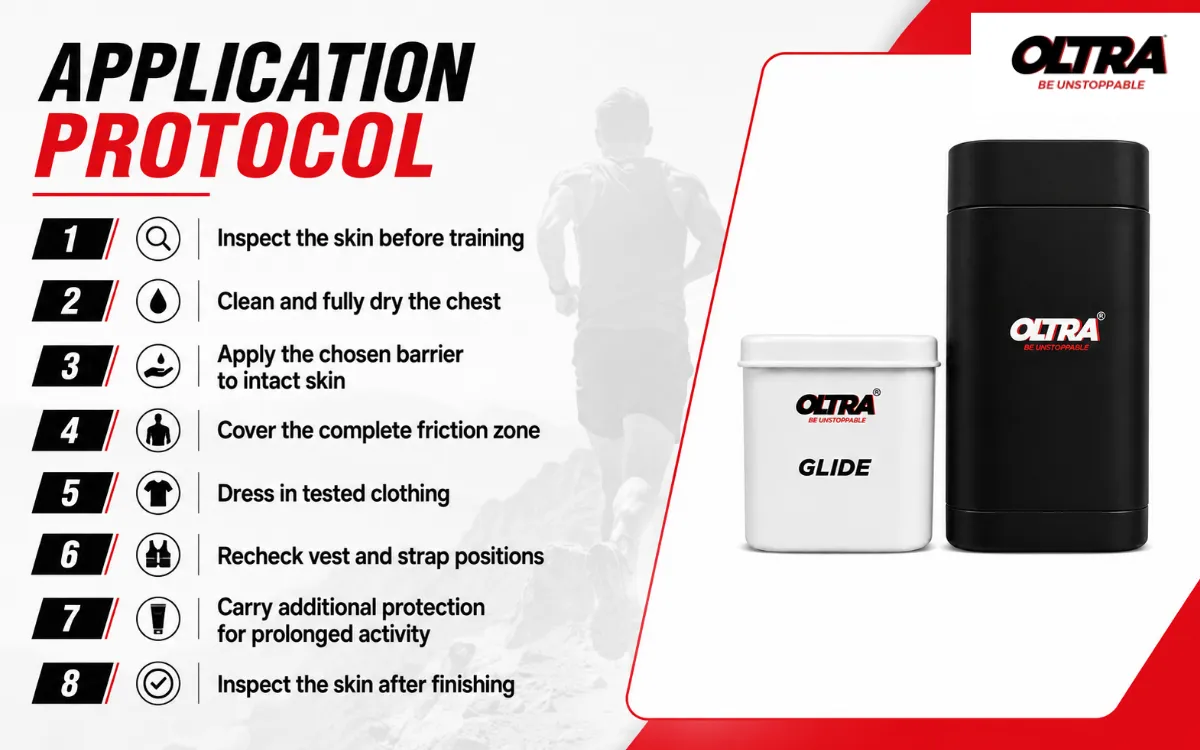
For consistent results, use a repeatable protocol:
-
Inspect the skin before training.
-
Clean and fully dry the chest.
-
Apply the chosen barrier to intact skin.
-
Cover the complete friction zone.
-
Dress in tested clothing.
-
Recheck vest and strap positions.
-
Carry additional protection for prolonged activity.
-
Inspect the skin after finishing.
Do not apply an ordinary preventative balm to bleeding or infected tissue unless the product is specifically approved for that use.
Managing Chafing During an Event
Early recognition is crucial. A mild tingling sensation can rapidly become burning when the athlete continues at the same pace in wet clothing.
At the first sign:
-
Check for folded fabric.
-
Move a chest strap.
-
Change the top when possible.
-
Reapply appropriate protection.
-
Add a body-safe dressing.
-
Consider stopping if the skin is open.
Athletes should include these decisions in race planning rather than improvising under fatigue.
Recovery and Return to Running
Wash affected skin gently and remove residual salt. Pat the area dry and minimise contact with tight clothing.
Return to normal training when the skin is closed and everyday movement is comfortable. Continuing to expose broken skin to sweat and friction can delay recovery and increase the likelihood of complications.
Seek professional care for spreading redness, pus, fever, substantial swelling, continued bleeding or symptoms that do not improve. Unexplained nipple discharge, lumps or changes unrelated to exercise should also be assessed.
Why Athletes Choose Oltra Glide
Oltra develops natural personal-care products designed to work across active and everyday environments. Oltra Glide uses a reusable applicator with replaceable 40g refills, allowing direct application to the chest and other friction-prone areas. It is plant-based certified, made in Britain, vegan and cruelty-free. The formulation is free from petroleum, parabens and aluminium, with Core available as an unscented option.
Athletes experiencing chafing on nipples can incorporate Oltra Glide into a structured pre-training protocol. Its refillable design also makes it suitable for regular use throughout a training block rather than reserving protection only for race day.
Treat Skin Protection as Performance Preparation
Chest chafing may be superficial, but it can change posture, concentration and willingness to complete future sessions. Athletes should manage it with the same forward planning used for footwear, fuelling and hydration.
Evaluate the environment, test the clothing and apply protection before friction begins. A dependable routine supports both comfort and training continuity.

